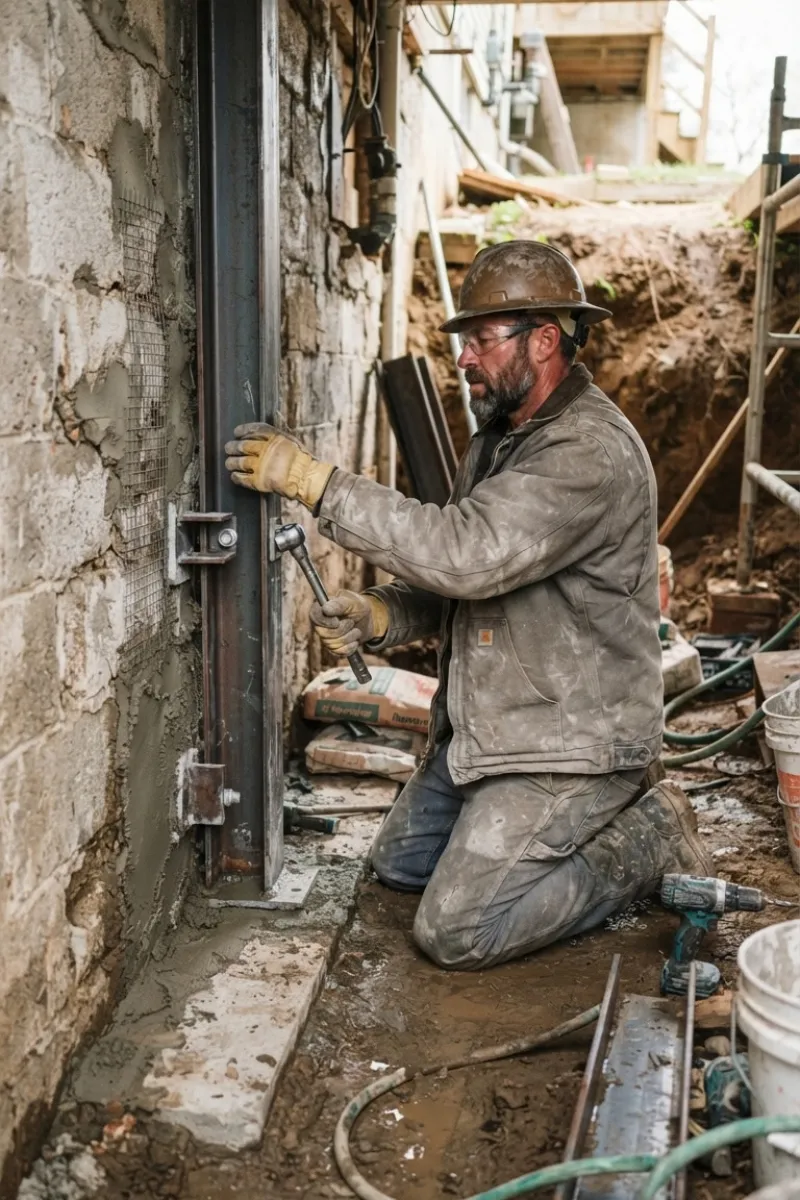
Foundation problems can affect more than the appearance of a property. Cracks, wall movement, settlement, moisture, deteriorated masonry, and drainage problems can gradually affect the condition and stability of a structure when the underlying cause is not addressed.
Contact our team to discuss your foundation concerns and request an inspection or estimate.
We repair common foundation problems such as cracks, settling, bowing walls, uneven floors, moisture intrusion, and structural movement.
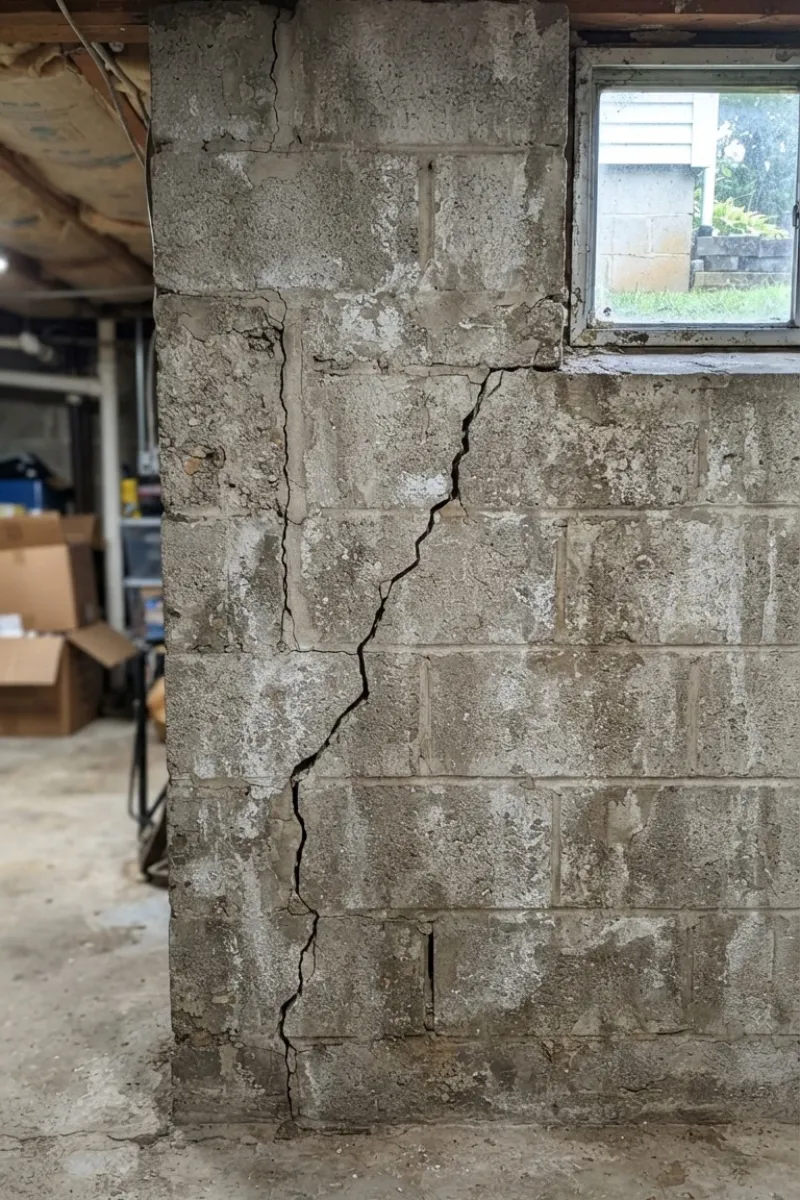
Foundation cracks can develop because of settlement, soil movement, material shrinkage, moisture, structural stress, or pressure against foundation walls.
Cracks may appear vertically, horizontally, through mortar joints, around basement openings, or in stair-step patterns through masonry.
The location and pattern of the crack help determine whether the appropriate solution involves crack repair, masonry restoration, reinforcement, stabilization, or another repair method.
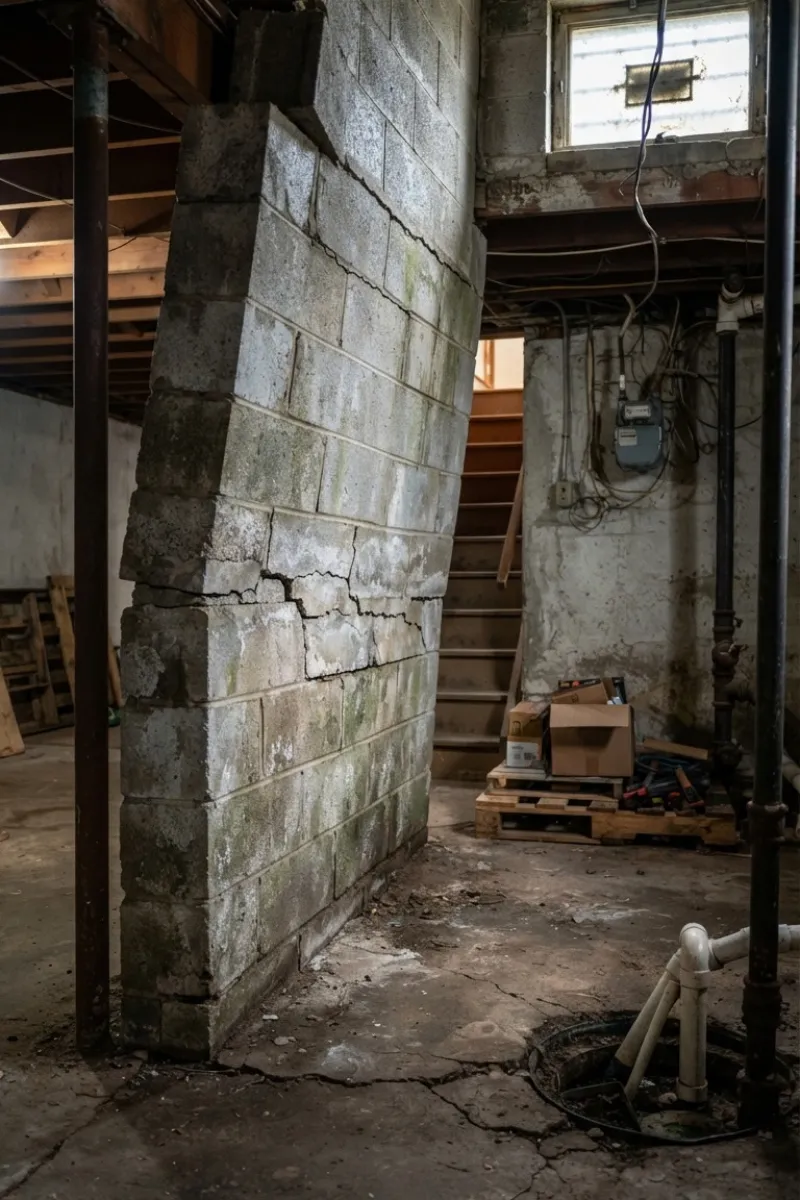
Foundation and basement walls can gradually move inward when pressure develops against the exterior side of the wall.
This may be associated with saturated soil, groundwater pressure, inadequate drainage, structural stress, or deterioration of the existing wall.
The amount of movement and condition of the structure must be considered before determining whether repair, reinforcement, or stabilization is appropriate.
Settlement occurs when part of a foundation moves downward or loses consistent support.
Possible warning signs include: Stair-step cracking, Cracks around doors and windows, Uneven or sloping floors, Gaps between building materials, Changes in door or window alignment, Cracks that continue to widen or reopen
The appropriate solution depends on the extent of movement and what is causing the foundation to settle.
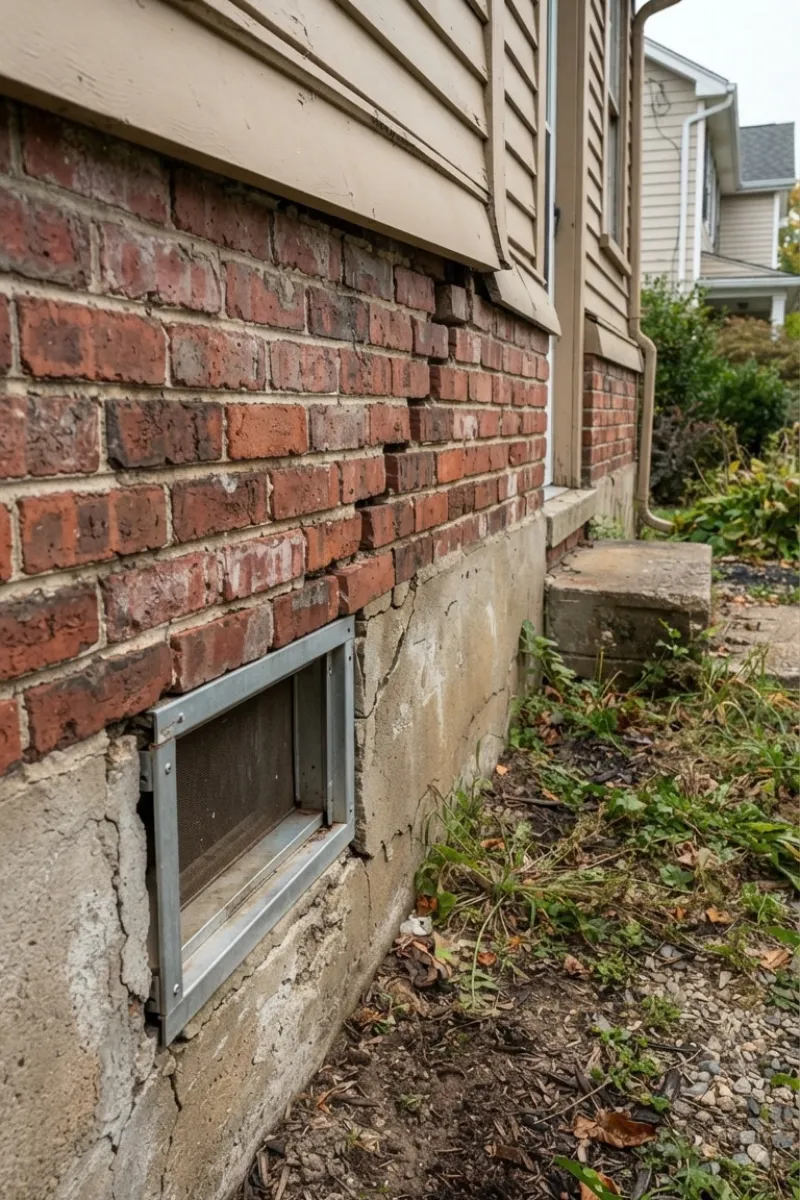
Brick, block, and stone foundations can deteriorate as mortar joints weaken or masonry units become damaged by age, moisture, weather exposure, or movement.
Depending on the condition, repairs may involve repointing, replacing damaged masonry, resetting materials, localized rebuilding, or reinforcement.
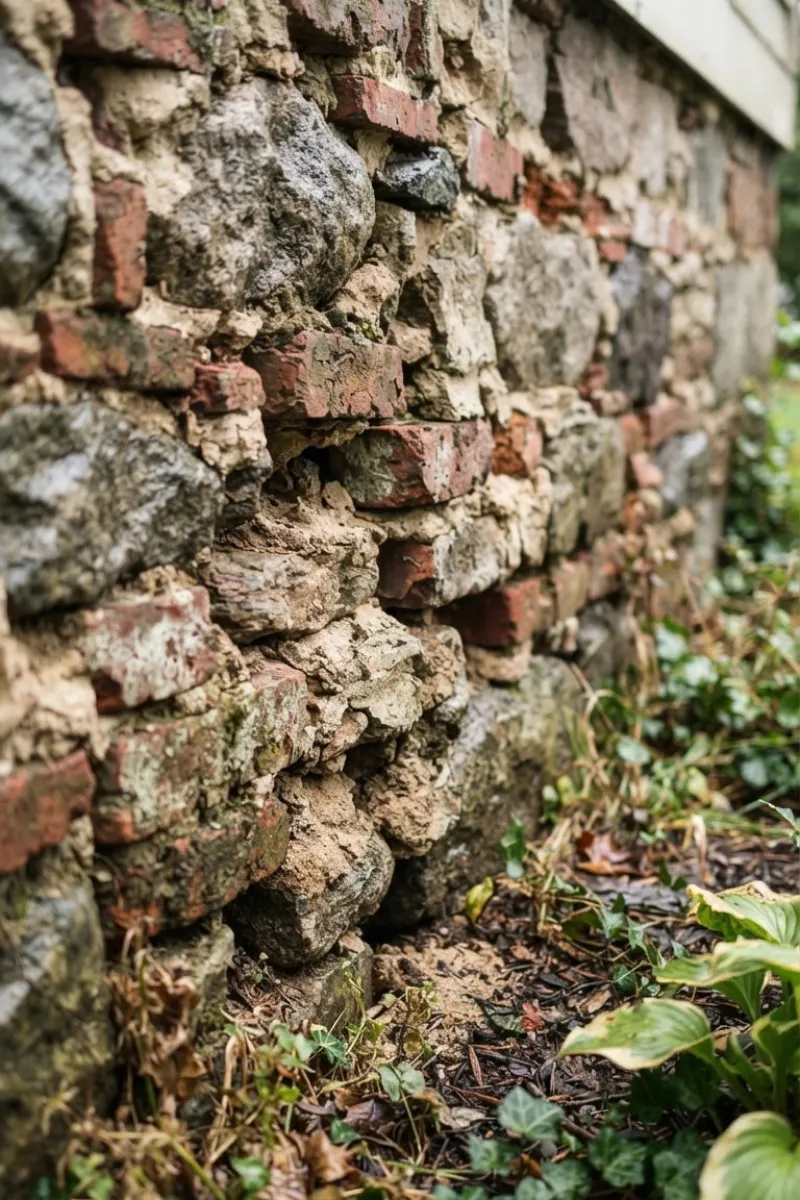
Water may enter through cracks, deteriorated mortar joints, openings, floor-to-wall joints, or damaged masonry.
Poor drainage and groundwater pressure can also contribute to recurring basement moisture.
Where water and foundation damage occur together, both the damaged area and the source of moisture should be considered.
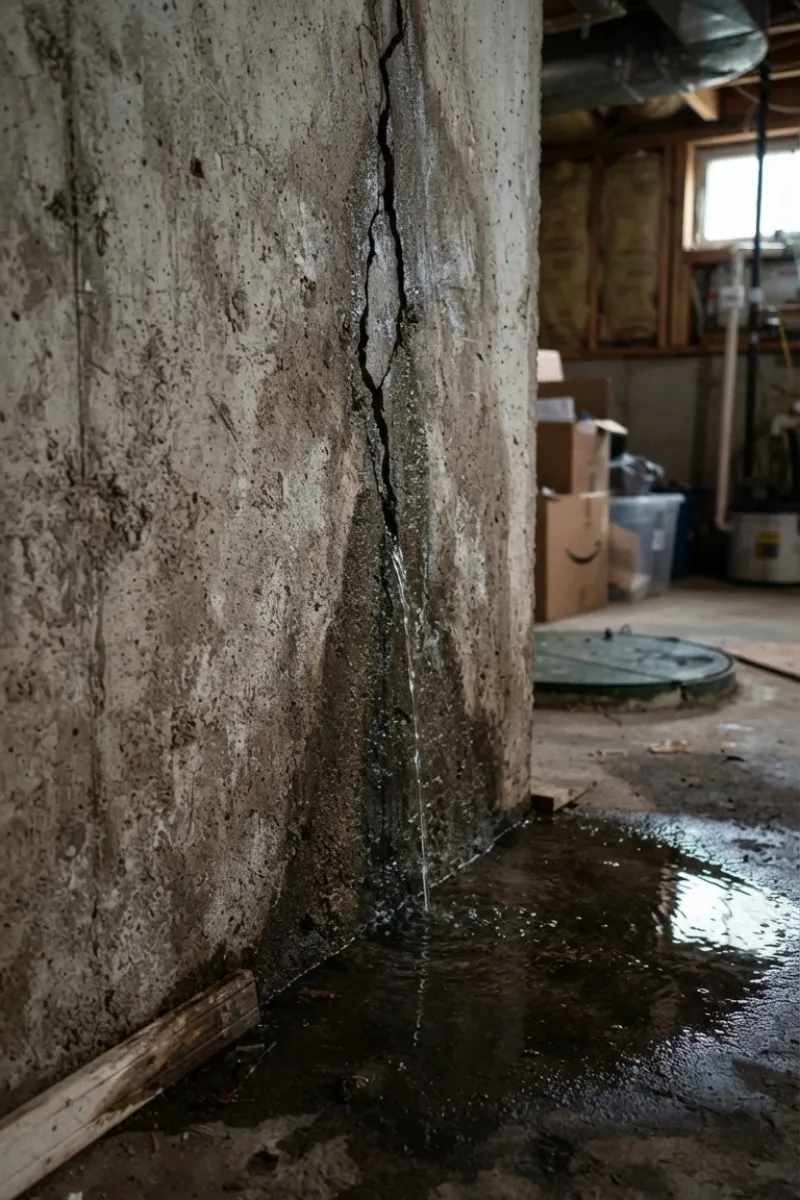
Understanding why foundation damage developed is an important part of choosing the correct repair.
Soil beneath and around a property can compact, shift, expand, or lose support over time.
If one part of the foundation moves differently from another, cracks, settlement, or structural movement may develop.
Water that repeatedly collects around the foundation can saturate surrounding soil and increase pressure against basement and foundation walls.
Drainage problems can also contribute to recurring moisture, masonry deterioration, and basement leaks.
Groundwater surrounding a basement can place pressure against foundation walls and beneath basement floors.
This pressure may contribute to: Basement leakage, Damp masonry, Water at wall-to-floor joints, Cracking, Wall movement, Recurring moisture problems
Water that enters soil, masonry, mortar joints, or existing cracks can freeze and expand during cold weather.
Repeated freezing and thawing can gradually contribute to cracking and deterioration.
Older brick, block, and stone foundations can develop deteriorated mortar, open joints, loose masonry units, and weakened sections.
Where the surrounding structure remains serviceable, repointing and masonry restoration may help restore deteriorated areas.
Movement may occur because of changing soil conditions, loss of support, water conditions, deterioration, previous construction issues, or other structural factors.
Where movement is significant or ongoing, additional stabilization or structural work may be required.
Our repair solutions may involve crack repair, masonry restoration, repointing, reinforcement, stabilization, localized rebuilding, waterproofing, drainage improvements, or a combination of services.
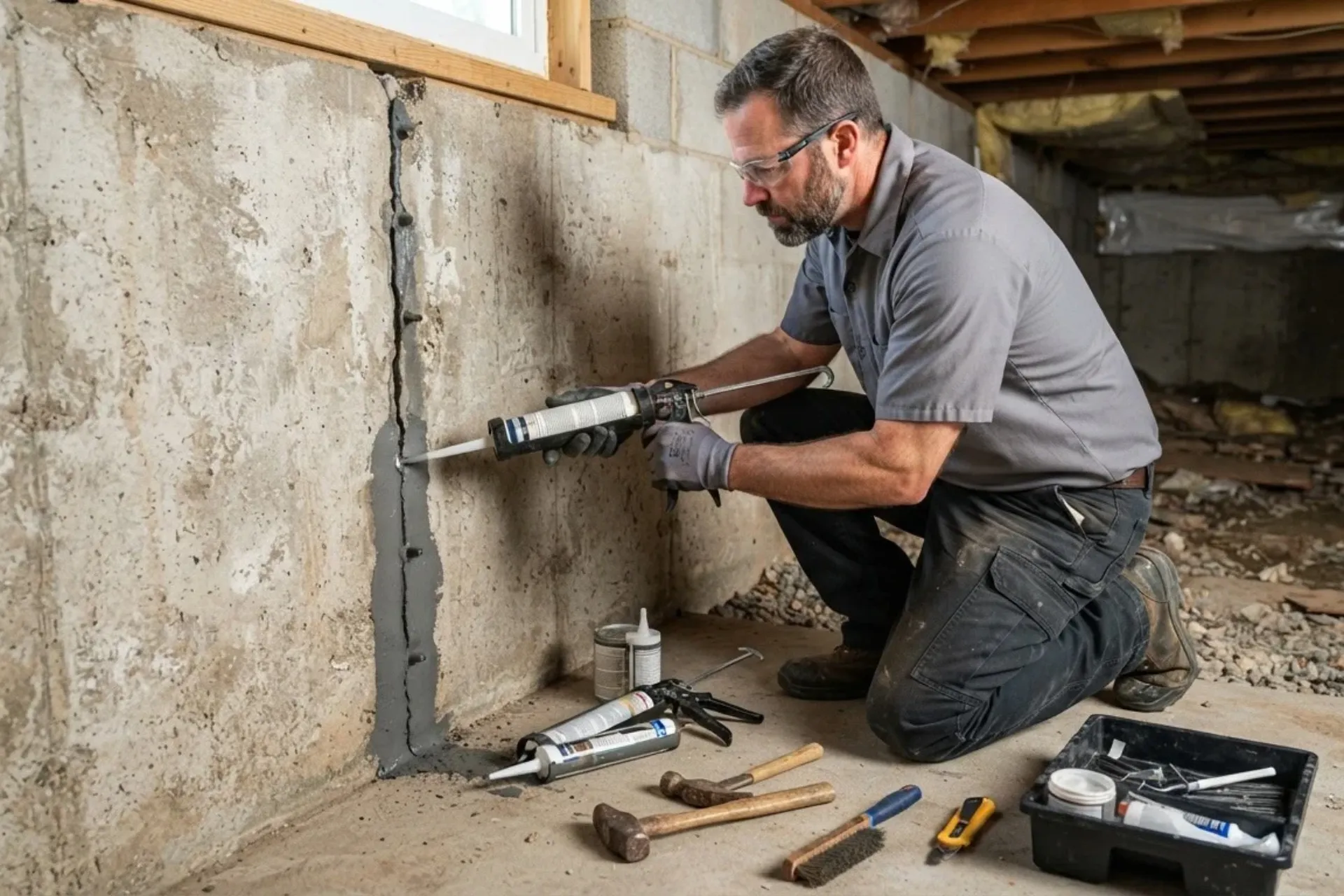
Foundation cracks can appear in concrete, concrete block, brick, or stone foundations.
The correct repair depends on whether the crack is isolated, water-related, masonry-related, or connected to structural movement.
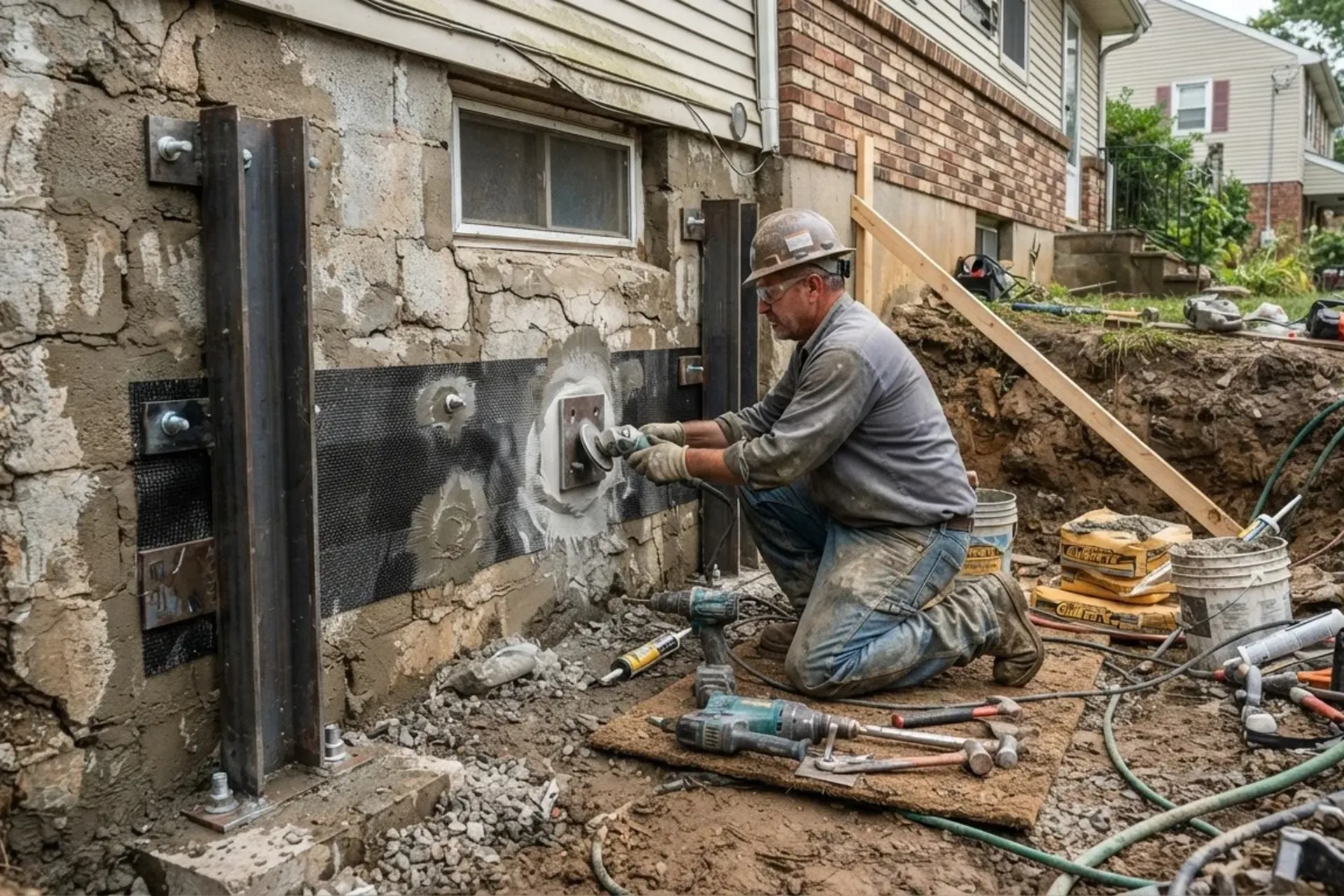
Structural foundation problems may require more than filling or sealing cracks.
Signs such as significant settlement, bowing walls, structural cracking, visible movement, uneven floors, or loss of support may indicate that additional reinforcement or stabilization should be considered.
Not every foundation crack requires stabilization or underpinning. The repair should reflect the severity and cause of the problem.
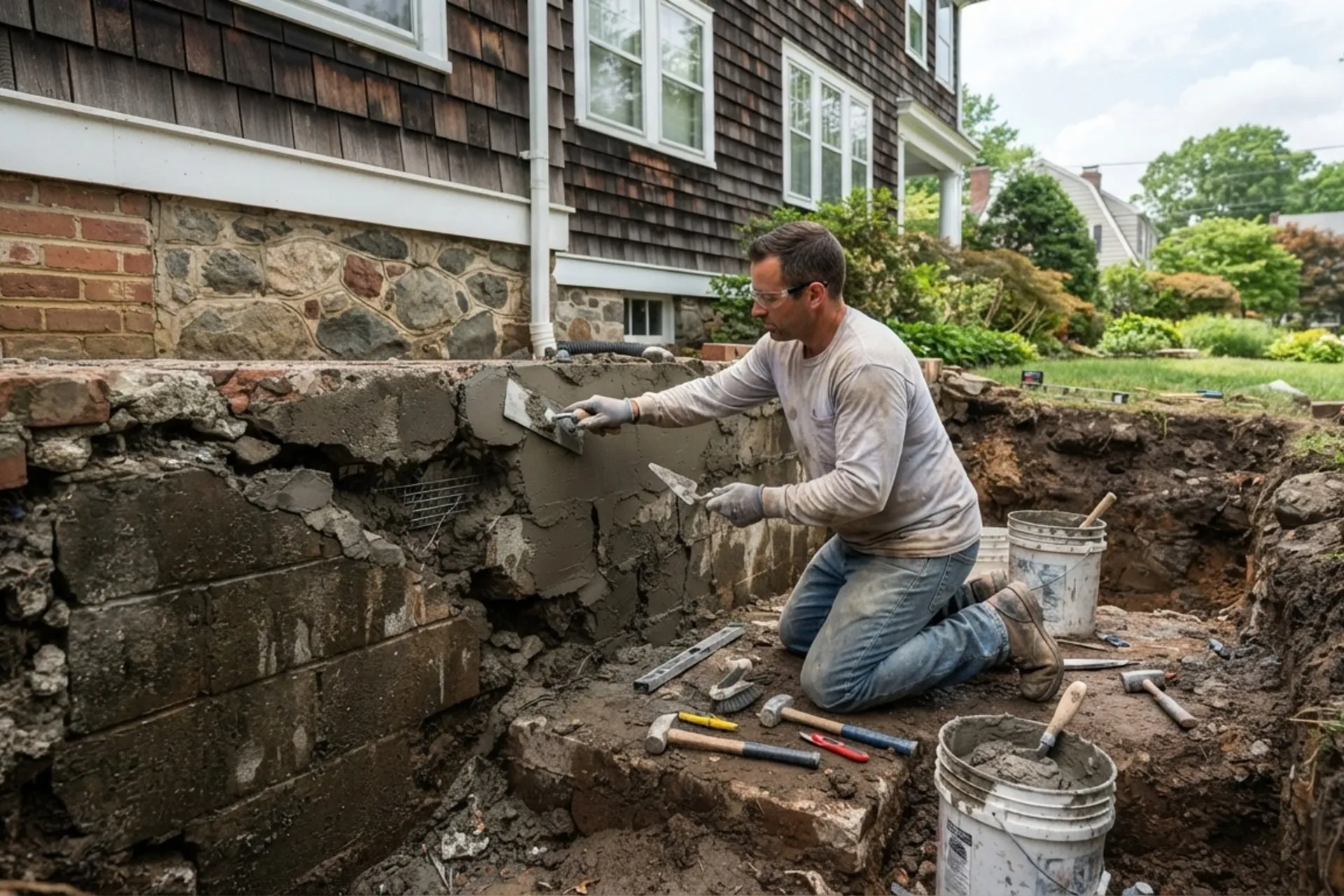
Foundation repair and masonry repair often overlap, particularly with brick, concrete block, and stone foundations.
Repairs may involve repointing, replacing damaged masonry units, resetting stone, repairing cracks, rebuilding localized areas, or reinforcing weakened sections.
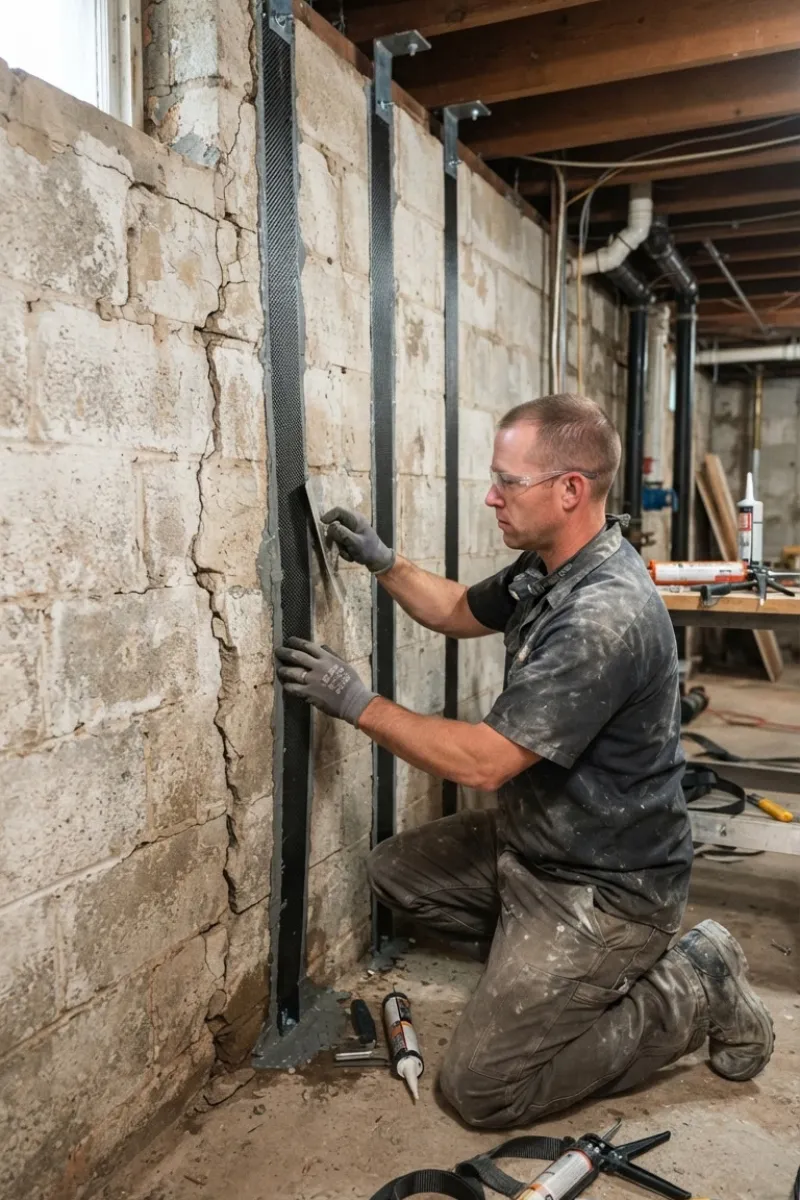
Basement foundation walls are exposed to structural forces as well as moisture from surrounding soil.
Depending on the condition, basement foundation repair may involve structural work, masonry restoration, crack repair, waterproofing, drainage improvements, or a combination of services.
Different foundation materials can develop different problems and may require different repair methods.
Concrete foundations may develop cracking, settlement, water intrusion, deterioration, or structural movement.Depending on the problem, repairs may involve crack treatment, waterproofing, reinforcement, stabilization, or localized concrete repair.
Block foundations can develop deteriorated mortar joints, cracked blocks, displaced sections, water intrusion, and wall movement. Repairs may include repointing, block replacement, crack repair, wall reinforcement, waterproofing, or localized rebuilding.
Brick foundations can be affected by deteriorated mortar, cracked bricks, moisture, movement, and settlement. Repair may involve repointing, brick replacement, rebuilding damaged areas, stabilization, or water-management improvements.
Stone foundations rely heavily on the condition of the stonework and surrounding mortar. Loose stones, missing mortar, open joints, moisture penetration, and deterioration may require repointing, stone resetting, masonry restoration, drainage improvements, or waterproofing.
Not every damaged foundation requires the same level of work.
The correct approach depends on how widespread the damage is, whether movement is occurring, the condition of the existing material, and whether moisture or drainage is contributing to the problem.
Localized repair may be appropriate when damage is limited to specific cracks, mortar joints, masonry units, or smaller areas of deterioration. The surrounding structure must remain suitable for repair.
Stabilization may be considered where part of the structure is moving, bowing, settling, or losing reliable support. The method depends on the construction and condition of the foundation.
When one section has deteriorated significantly but the surrounding foundation remains serviceable, localized rebuilding may be appropriate. This may involve removing and rebuilding damaged brick, block, stone, concrete, or other structural sections.
More extensive work may be considered where deterioration or movement affects a substantial portion of the foundation, materials are no longer suitable for reliable repair, or supporting conditions have significantly failed. The goal is to select the level of repair that matches the actual condition rather than replacing more of the foundation than necessary.
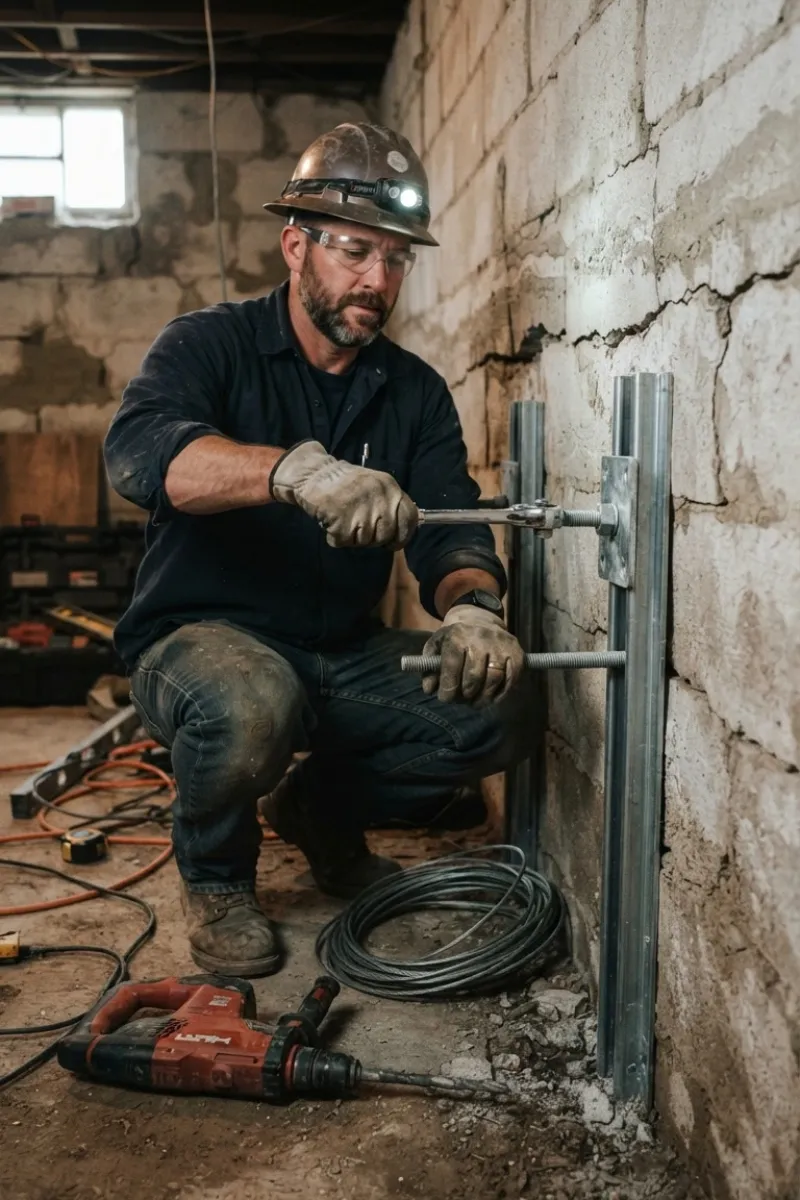
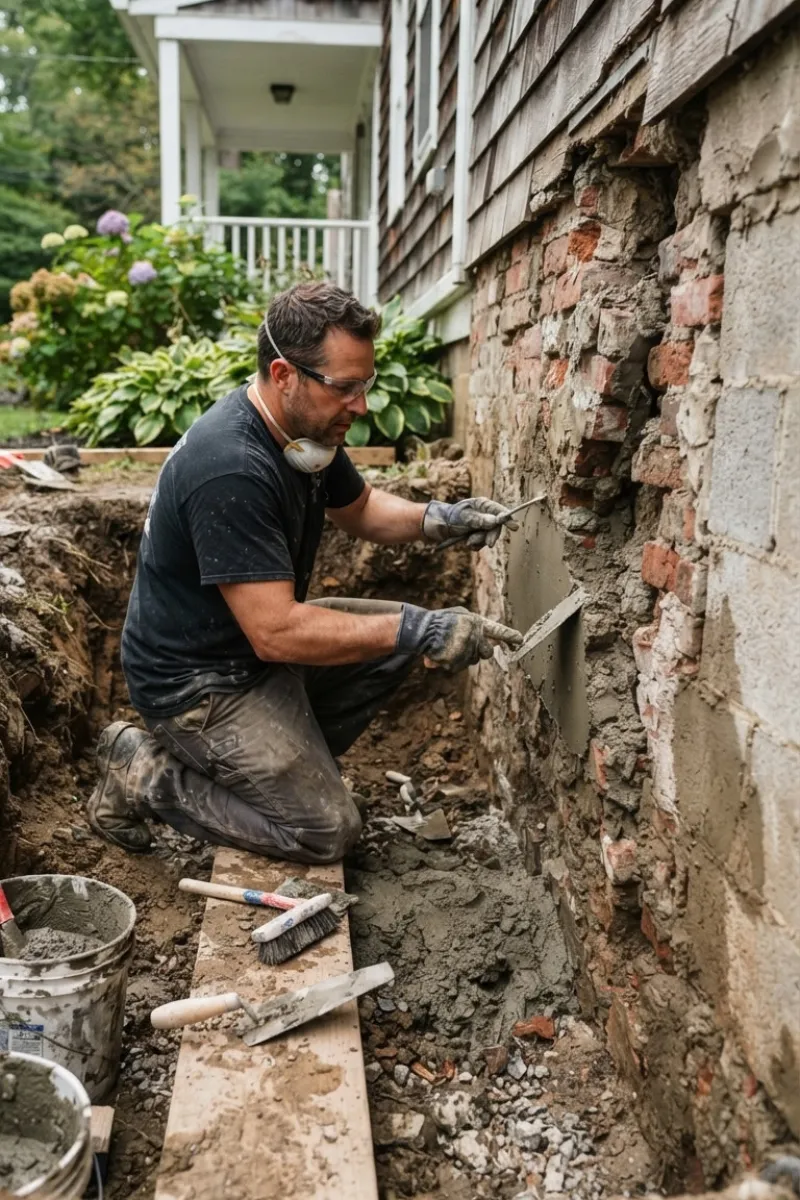
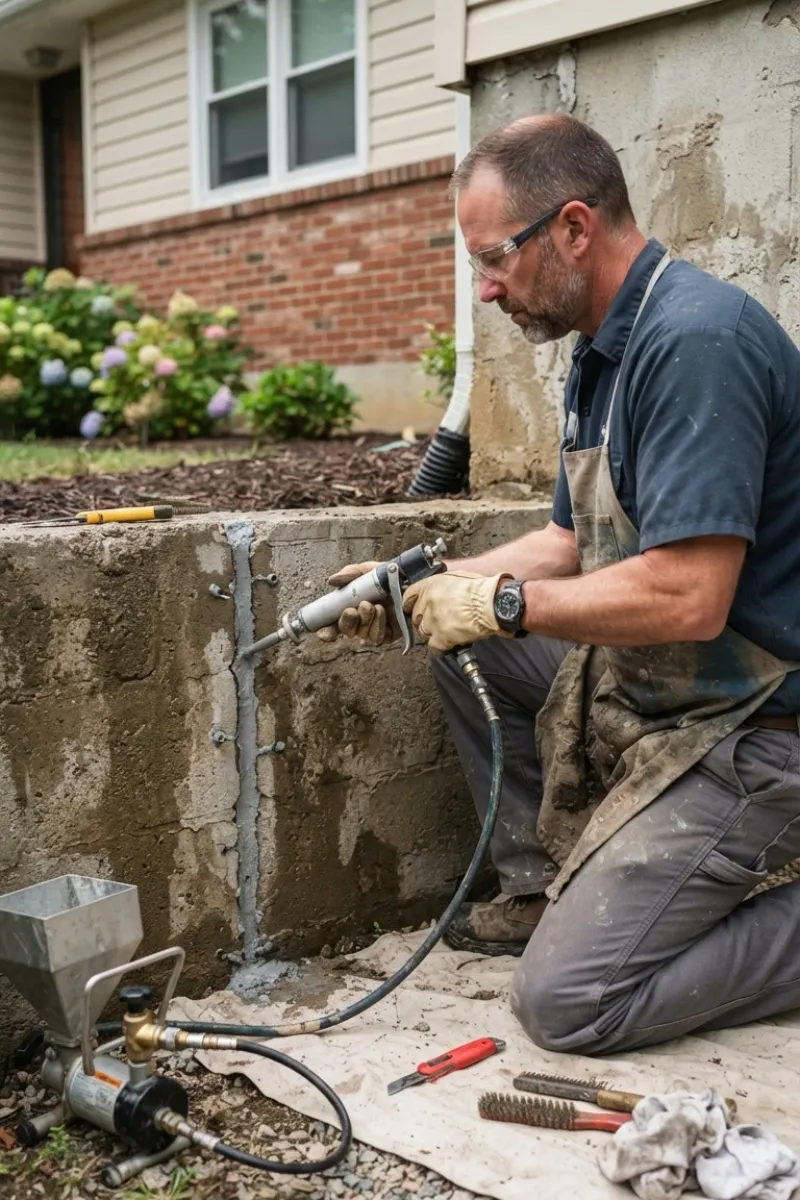
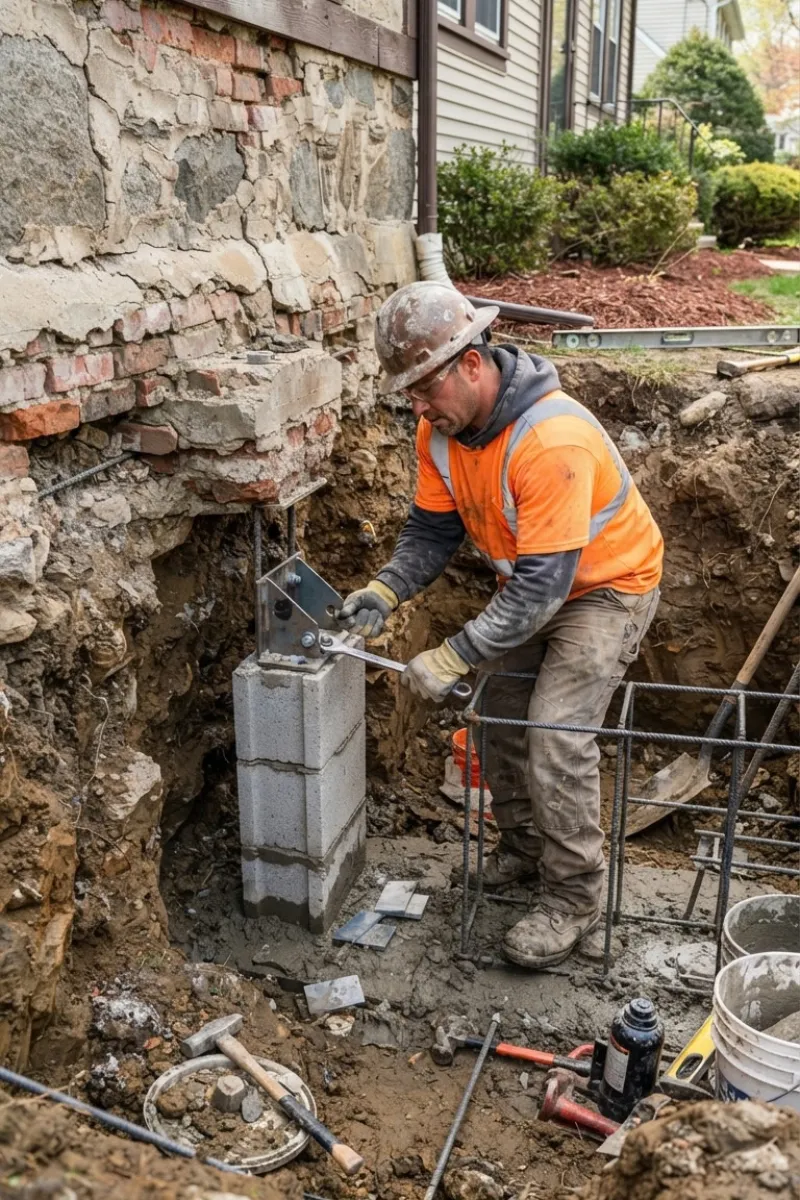
Foundation damage and basement water problems are often connected, but structural repair and water management solve different problems.
Waterproofing cannot correct a structurally unstable wall, and structural repair alone may not stop recurring water intrusion if drainage conditions remain unresolved.
Where both problems are present, a combined approach may be appropriate.
Waterproofing can help control moisture entering through foundation walls, basement walls, joints, cracks, and other vulnerable areas.
Depending on the source of the water, interior or exterior waterproofing measures may be considered alongside foundation repairs.
French drains can help collect and redirect groundwater before it continues accumulating around or beneath the foundation.
Drainage improvements do not replace structural foundation repair when structural damage is present, but they may form an important part of the overall solution.
A sump pump provides a controlled method for removing groundwater collected by a basement drainage system.
It may be used with an interior French drain or other basement drainage system where water must be actively removed from the property.
The sump pump, drainage route, sump pit, and discharge location should be considered together as part of the overall water-management system.
Foundation problems are not always obvious when they first develop. One symptom alone does not necessarily mean that extensive structural repair is required. However, widening cracks, visible wall movement, recurring moisture, settlement, or several symptoms appearing together are good reasons to have the affected area evaluated.
We make every project as smooth and stress-free as possible.
We review the visible foundation damage, cracks, masonry, basement walls, moisture conditions, and surrounding areas.
The goal is to determine whether the issue appears related to settlement, movement, deterioration, water pressure, drainage, or a combination of conditions.
A repair plan is selected based on the type and severity of the problem. This may include crack repair, masonry work, stabilization, reinforcement, waterproofing, drainage work, or other foundation repairs.
The required work is carried out using methods suited to the existing foundation and the problem being addressed.
If moisture or drainage is contributing to the problem, additional measures such as a French drain, sump pump, or waterproofing may be recommended.
Foundation walls can include concrete, brick, block, stone, mortar, structural components, drainage systems, and waterproofing elements.
On Top Masonry & Construction brings experience across foundation, masonry, basement, waterproofing, and drainage work, allowing us to consider the condition of the surrounding property rather than focusing only on the most visible crack.
Evaluating the condition before recommending repairs
Identifying contributing moisture and drainage problems
Repairing damaged masonry and foundation materials
Selecting the level of repair appropriate for the problem
Coordinating related waterproofing or drainage work where needed
Providing a clear scope based on the condition of the property
See what homeowners and property owners say about their experience with On Top Masonry & Construction.
Posted on Google
 Jonathan Calo
Trustindex verifies that the original source of the review is Google.
on top masonry and construction and their team did an amazing job on my crawl space i definitely recommend their services very great peoplePosted on Google Gregory ClarkThey performed great work in my crawl space.Posted on Google
 Ahmad HendersonThese guys did my basement really good and I would love to have them back for more business. I would recommend these guys to anyone.Posted on Google
 DanvenDid such a great job with my basement , I would recommend him to everyone.Posted on Google
 Marion NavarroGreat experience!!! 100% will do business againPosted on Google
 Mohammad AbuhadbaExcellent construction company—professional, reliable, and efficient. The team delivered high-quality work on time, communicated clearly throughout the project, and paid great attention to detail. Highly recommended.Posted on Google
 Kamlesh GajjarGood work and nice peopleVerified by TrustindexTrustindex verified badge is the Universal Symbol of Trust. Only the greatest companies can get the verified badge who has a review score above 4.5, based on customer reviews over the past 12 months. Read more
Foundation problems can be connected to moisture, drainage, deteriorated masonry, basement conditions, and other parts of the property.
Helps manage water and moisture entering through basement walls, floors, joints, cracks, and other vulnerable areas.
Addresses damaged basement walls, deteriorated masonry, concrete damage, cracks, and related repair concerns.
Helps collect and redirect groundwater that may contribute to basement moisture and pressure around foundation walls.
Improves water movement around the property where runoff, saturated soil, or standing water may be contributing to foundation or basement problems.
Provides a controlled way to remove groundwater collected by an interior basement drainage system.
Restores damaged brick, block, stone, mortar, and other masonry materials used within foundation walls and surrounding structures.
Restores deteriorated mortar joints in brick, block, and stone foundations where existing masonry remains suitable for repair.
Addresses damaged, cracked, or deteriorated concrete around foundation and basement areas.
Cracks, settlement, wall movement, deteriorated masonry, and recurring basement moisture can have different underlying causes. Addressing the visible damage without considering the surrounding conditions may leave part of the problem unresolved.
On Top Masonry & Construction provides foundation repair along with related masonry, basement waterproofing, drainage, French drain, and sump pump services to help determine an appropriate solution for your property.
We serve homeowners in Morristown, Bayonne, New Brunswick, Lakewood, Montclair, Bridgewater, Old Bridge, Southampton Township, Toms River, and nearby areas.
Contact our team to discuss the signs you are seeing and arrange an assessment and estimate.
Yes. Many foundation cracks can be repaired, but the correct method depends on the location, pattern, cause, and whether structural movement is present.
Some cracks may require localized repair, while others may need reinforcement, masonry restoration, waterproofing, or stabilization.
Common signs include foundation cracks, stair-step cracking, bowing basement walls, uneven floors, sticking doors or windows, gaps between materials, visible settlement, recurring basement moisture, and deteriorated masonry.
No. Some cracks may develop because of minor movement, shrinkage, age, or moisture.
Horizontal cracks, widening cracks, significant stair-step cracking, or cracks accompanied by visible movement generally require closer evaluation.
Settlement can occur when soil beneath or around the foundation shifts, compacts, loses support, or changes because of moisture conditions.
Different sections of a foundation may also settle at different rates.
Underpinning is a structural repair method used to provide additional support to an existing foundation.
It may be considered where significant settlement or loss of support has occurred, but it is not required for every foundation problem.
Yes. Masonry foundations can often be repaired through repointing, masonry replacement, crack repair, rebuilding, reinforcement, stone resetting, or stabilization depending on their condition.
Waterproofing can help control moisture and water intrusion, but it does not replace structural repair when the foundation itself is damaged or unstable.
Some properties may require both foundation repair and waterproofing.
Yes. Cracks, deteriorated mortar joints, movement, groundwater pressure, and drainage problems can create pathways for moisture to enter a basement.
More extensive rebuilding may be considered when structural sections are severely deteriorated, displaced, unstable, or no longer suitable for reliable localized repair.
Many foundation problems can still be addressed without completely replacing the foundation.
The timeframe depends on the type and extent of the damage.
Localized crack or masonry repairs may require considerably less work than stabilization, underpinning, partial rebuilding, or projects involving both structural repair and waterproofing.