Water in the basement keeps coming back until the cause is fixed. We find where the water gets in, whether that is a crack, the joint between the wall and the floor, or the ground around the house, and stop it from the inside, the outside, or both.
Tell us what you are seeing in your basement and we will arrange a free inspection.
The right repair starts with finding exactly where the water gets in. These are the basement water problems we see most often in New Jersey homes.
Water along the base of the walls is the most common basement leak. It usually shows up after heavy rain or snowmelt, and it keeps coming back until the pressure behind it is relieved.

Dark, damp patches and white, chalky deposits (efflorescence) show that moisture is moving through the masonry. Paint peeling off basement walls is another sign.

Water seeping up through cracks in the floor slab, or a sump pump that runs constantly, points to high groundwater under the basement.

Basement window wells that fill with water and gaps around pipes and utility lines are easy entry points that are often missed.

A basement that smells musty is holding moisture even if you cannot see standing water. Left alone, it can lead to mold on walls, stored items and finished surfaces.

Most basement water starts outside the house, so the cause is the first thing we check. For a longer read, see why water gets into NJ basements.
When the soil around a foundation is saturated, water presses against the walls and floor and forces its way through any opening it can find.
Ground that slopes toward the house sends rainwater straight to the foundation instead of away from it.
Blocked gutters and short downspouts dump roof water beside the walls, often in the same spot every storm.
After heavy rain or snowmelt, the water table can rise close to the basement floor and push water up through the slab.
New Jersey winters freeze and thaw the soil repeatedly. Over time this opens cracks in concrete and block that later let water in.
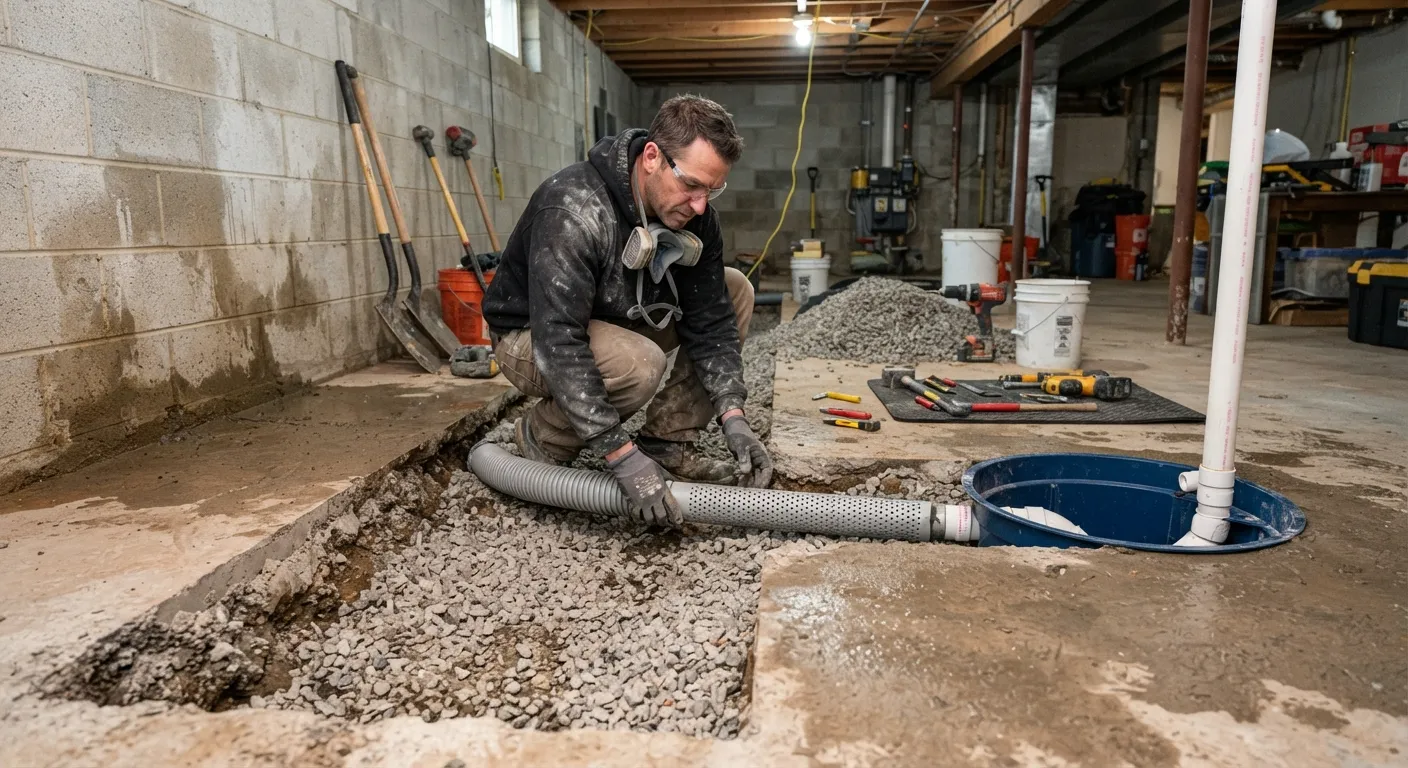
Interior waterproofing collects water that reaches the basement and moves it out before it can do damage. It is often the right choice when digging outside is difficult, or when water comes in at the wall-floor joint or through the floor.
The water an interior system collects is pumped out by a sump pump, which we install or repair as part of the system.
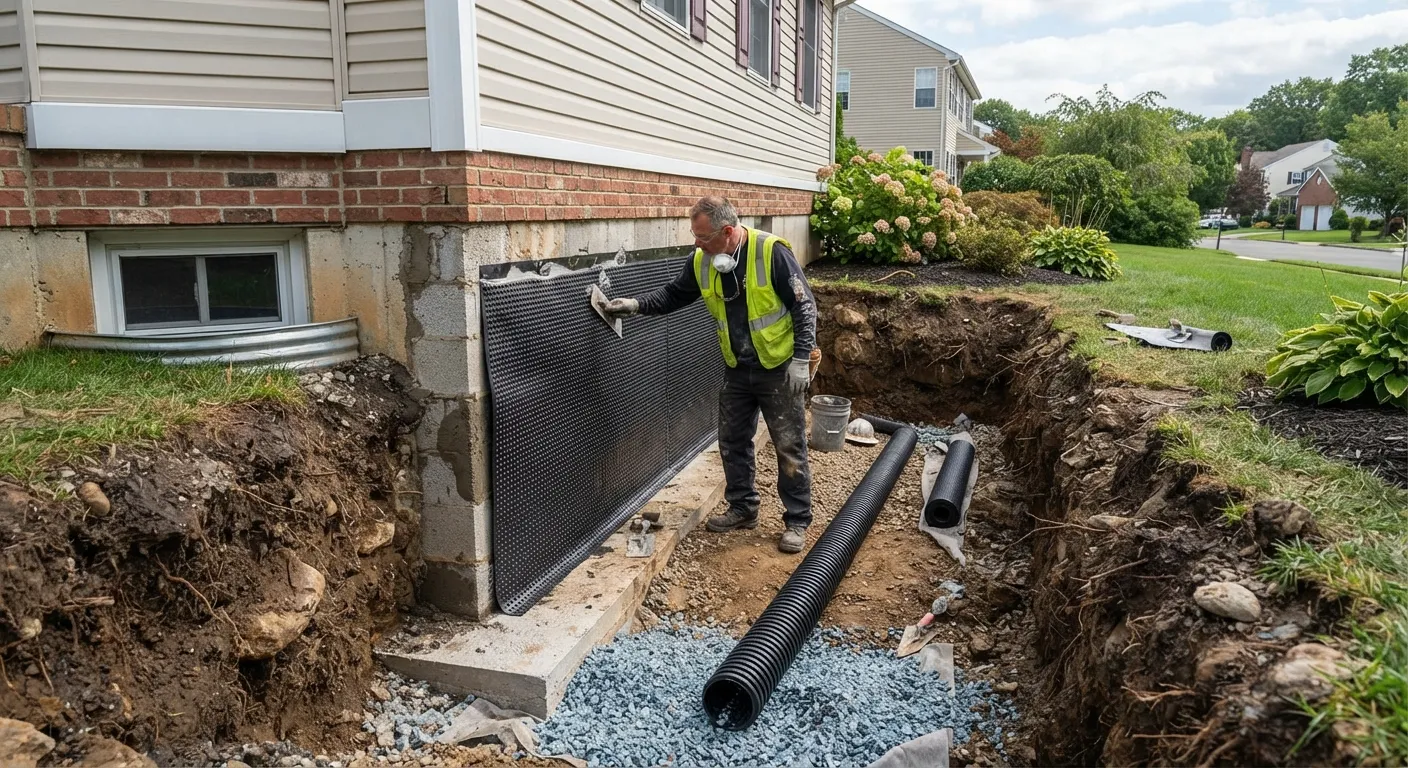
Exterior waterproofing stops water at the outside of the wall, before it reaches the basement. It suits walls that let water through along their length, and older stone foundations with many joints.
The footing drain is usually a French drain, which carries the water away from the house. Basements with water coming in from several directions may need exterior and interior work together.

Water and foundation damage feed each other. Wet soil presses on the walls and opens cracks, and cracked walls let more water in.
A leaking crack that is not moving can simply be sealed. A crack that is wide, horizontal or still growing needs foundation crack repair first, and a wall that has moved needs our foundation repair services. We fix both in the same job, so the waterproofing lasts.
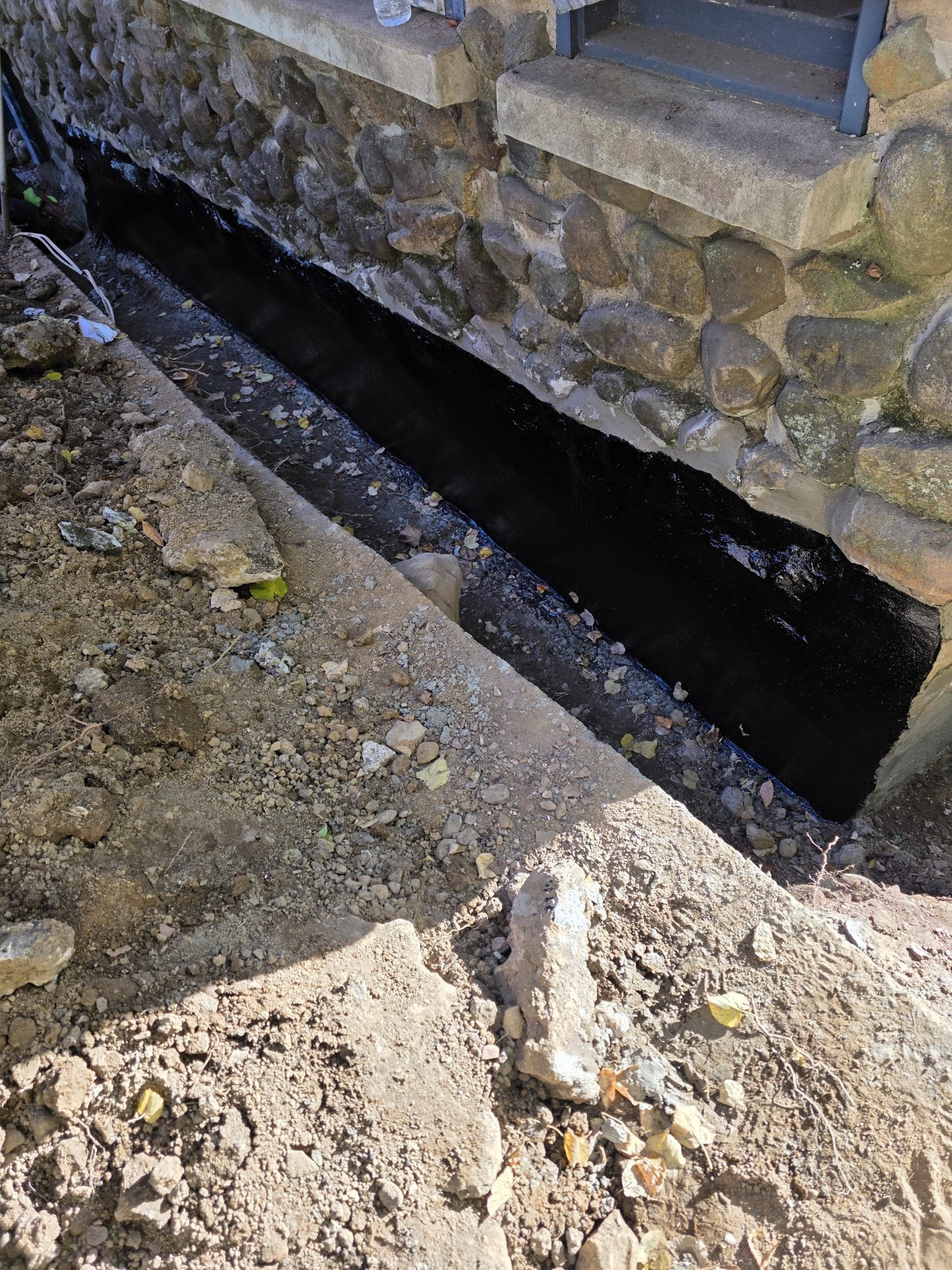
Interior patching was not holding on this Chatham home, so we fixed the problem from the outside. We excavated along the fieldstone foundation, sealed the walls with a waterproofing membrane, installed a French drain to carry water away, then regraded the yard and restored the asphalt path.
Water gets into each type of foundation in a different way, so the waterproofing method has to match the wall.
Poured walls are solid, so water usually finds its way in at cracks and at the joint with the floor slab.
Block walls are hollow and can fill with water, which then seeps out at the base. They often need drainage and attention to cracked or open mortar joints.
Moisture moves through worn mortar and porous brick, so brick repointing is often part of keeping a brick foundation dry.
Fieldstone foundations have many joints for water to follow, and the mortar between the stones wears away over time.
A clear process from the first visit to the finished job.
We look at the walls, floor, cracks and joints, and at the outside of the house, including grading, gutters and downspouts.
We explain where the water is coming from and why, so you understand the problem before any work is proposed.
We recommend interior, exterior or combined waterproofing and give you the scope and price before work starts.
Our crew carries out the work, whether that is crack injection, interior drainage, or excavation and membrane outside.
We backfill, regrade and restore the area, and add drainage where it is needed so water is carried away from the house.
A wet basement is rarely only a surface problem.
We are masonry and foundation contractors as well as waterproofers, so the walls, the joints and the drainage behind the water are all handled by one team.
Interior and exterior waterproofing, so the recommendation is not limited to one method
Masonry and foundation repairs done in the same job
Drainage outside the house, not only sealing inside
See what homeowners and property owners say about their experience with On Top Masonry & Construction.


 Trustindex verifies that the original source of the review is Google.
 Trustindex verifies that the original source of the review is Google.
 Trustindex verifies that the original source of the review is Google.
 Trustindex verifies that the original source of the review is Google.
 Trustindex verifies that the original source of the review is Google.
 Trustindex verifies that the original source of the review is Google.
 Trustindex verifies that the original source of the review is Google.
We provide basement waterproofing across New Jersey, including Old Bridge, Toms River, Southampton Township and Bridgewater, and throughout the areas we cover.
Contact our team to discuss the signs you are seeing and arrange an assessment and estimate.
Yes. We inspect the basement and the outside of the house, explain what we find, and give you the options and price at no cost.
Not always. A sump pump removes water that collects under or around the floor, but it will not stop water coming through the walls. It works best as part of a drainage system.
Interior work can be done all year. Exterior work needs digging, so frozen ground can affect timing. We'll tell you what is possible for your property when we inspect.
It depends on the size of the basement and whether the work is inside, outside or both. We give you a timeline with the quote, before any work starts.